A First Visit to a Public Meeting, Planned Around Listening
Plan a first public meeting visit around one agenda item, with a simple way to follow discussion and record what remains unclear.
A first public meeting is easier to follow when you choose one agenda item before you arrive. That small decision gives your attention a place to land, even if the room, procedures, and discussion are unfamiliar.
Listening is a complete way to participate in an initial visit. You can learn how decisions are discussed, notice which details are missing, and leave with questions grounded in what you heard. The right plan depends on what you want from the meeting and how much time or confidence you have that day.
Choose your purpose
If you are mainly curious about how the body works, attend without trying to understand every item. Pick one point on the agenda that sounds relevant, then listen for how the chair introduces it, who speaks, and what happens before the meeting moves on.
If a particular decision affects your neighborhood, household, or daily route, focus on that item rather than the meeting as a whole. You might listen for the proposal under discussion, the reasons participants give, and whether officials identify a next step. These are useful observations, not a demand that you master every detail.
If you are attending with someone else, agree beforehand on whether you want to compare notes or simply sit together. A companion can help you keep track of names or unfamiliar terms, but avoid making them responsible for interpreting every exchange. Each of you may notice different parts of the discussion.
If you have little time, check when your selected item is expected to appear and whether the meeting has a published order. Agendas can change as discussion runs long, so plan for some waiting rather than treating the listed position as an exact appointment.
Prepare one item
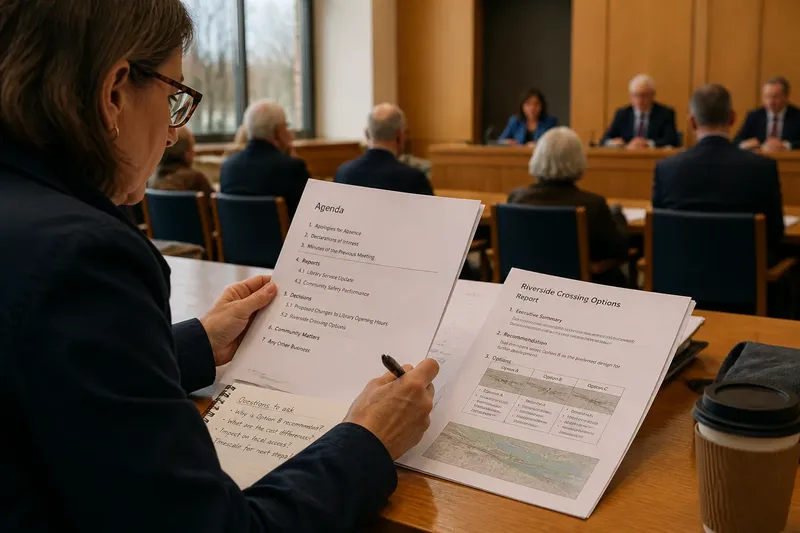
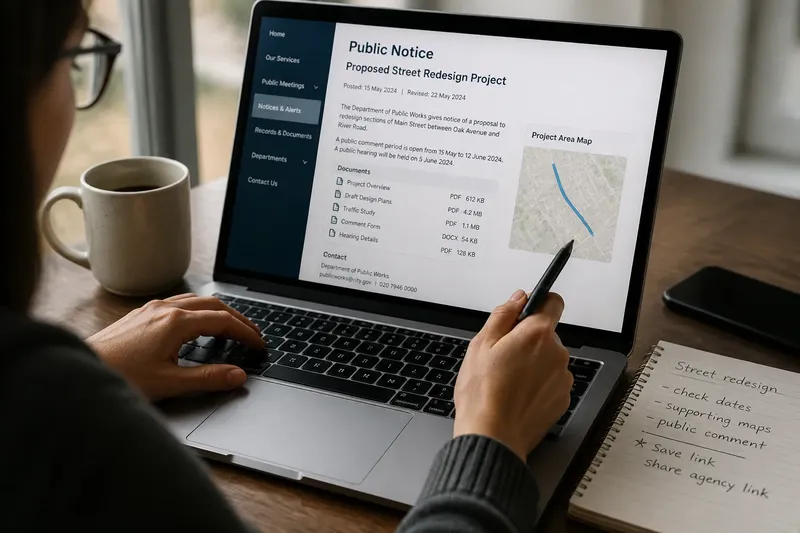
Find the meeting notice and agenda through the local government or public body’s website, a library, or a clerk’s office. Read the item title and any linked staff report or supporting document, but stop when you can state the subject in plain language. Preparation should help you recognize the discussion, not become a second job.
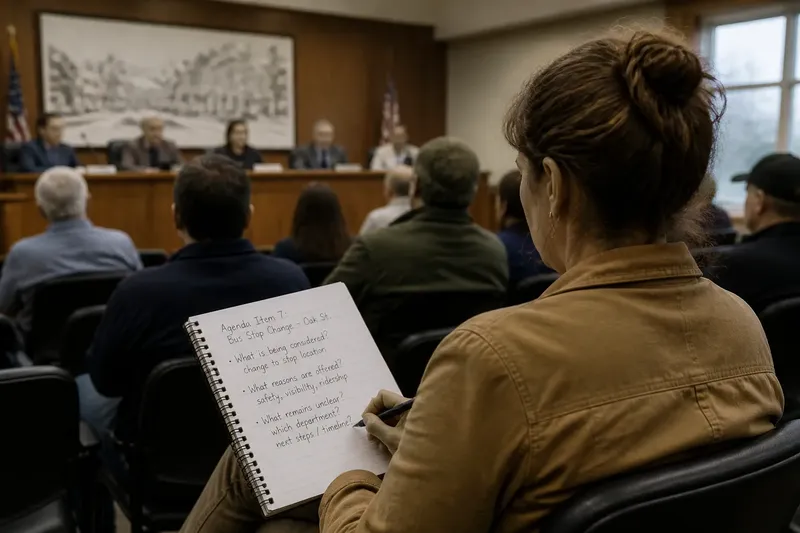
Write down three short prompts: what is being considered, what reasons are offered, and what remains unclear. Leave room beneath each one. You are making a listening aid, not a transcript, so fragments are enough.
- Note the exact agenda wording so you can recognize when the item begins.
- Mark a name, place, or technical term you do not recognize.
- Record any stated decision, referral, delay, or next action.
- Separate what a speaker said from what you inferred.
- Leave a question mark beside anything you could not follow.
Say you want to understand a proposed change to a bus stop near your block. Before the meeting, you note the stop’s name and write, “What change is proposed?” During discussion, you hear that the matter may be sent to another department but miss which one; afterward, your note identifies a specific point to check rather than a vague sense that the meeting was confusing.
Settle into the room
Arrive with enough time to locate the meeting room, confirm that you are in the right session, and choose a seat where you can hear. If the room is full, do not assume that an empty chair is reserved or that you have missed an essential procedure; ask a staff member or attendant where visitors may sit.
Bring a notebook and pen, or use a quiet note-taking option on your phone. Silence notifications and avoid recording audio or video unless the meeting’s rules permit it. The chair or clerk can usually point you to the posted participation rules and explain whether visitors may speak, though you can remain a listener.
Notice the basic sequence without trying to decode every convention: who calls the meeting to order, how an item is introduced, and how the chair signals that discussion has ended. If a term or procedure is unfamiliar, write it down rather than interrupting the flow to look it up.
Listen by situation
If the item is presented by staff, listen for the choice officials are being asked to make and the information offered in support. A report may contain background that is useful, but your first visit does not require you to retain each detail.
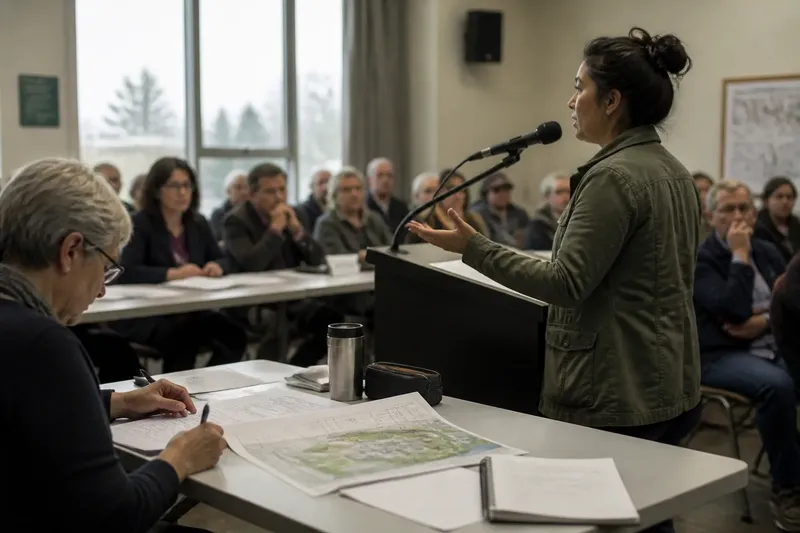
If residents speak, notice what kinds of experiences or concerns they bring forward. Listen for whether speakers address the same question or different parts of it; disagreement can arise because people are responding to distinct concerns, not because one person has misunderstood the entire issue.
If officials debate the item, track the points that affect the decision: proposed conditions, unresolved questions, requests for more information, or a motion. You do not need to decide who argued best. Your notes can record the alternatives and what the body ultimately does.
If the discussion is hard to hear or moves too quickly, choose one thread and let the rest pass. For instance, follow whether the item is approved, postponed, or sent for further work. A clear note about the outcome can be more useful than hurried notes on every speaker.
What should you write down?
How do I follow an unfamiliar agenda item?
Keep the agenda title in view and listen for the question officials are considering. When the conversation shifts, note whether it adds information, raises a concern, or changes what action is being proposed.
Should I speak on my first visit?
Only if you want to and the meeting provides a suitable opportunity; attendance does not obligate you to comment. Listening first can help you understand the format, time limits, and whether public remarks are accepted on that item.
What if I do not understand a term?
Write the term as you heard it, along with the sentence or topic around it. Later, check the meeting materials or ask the relevant office what it means in this context instead of relying on a guess.
How can I tell whether a decision was made?
Listen for the chair’s statement of the action and any announced vote, referral, or postponement. If you are unsure, note the uncertainty and check the approved minutes or other official record when it becomes available.
Leave with a question
Before leaving, review your notes and mark the point that matters most to clarify. It might be the meaning of a term, which department will handle a referral, or where a supporting document can be found. One precise question is easier to pursue than a page of impressions.
For basic follow-up, check the meeting materials and official records, or contact the clerk or department named during discussion. Meeting records may be posted later, and their format can differ from what you heard in the room. If the answer affects a time-sensitive decision, ask the office how to confirm the current status.
A first public meeting does not have to end with a speech or a settled opinion. If you leave knowing how one item was discussed and what remains unclear, your listening plan has done its job—and it gives you a more grounded reason to return.