Written Comment or Public Session: Two Ways to Respond to a Proposal
Written comment or public session? Compare how each format helps you make a clear point, respond to a proposal, and choose the right way to take part.
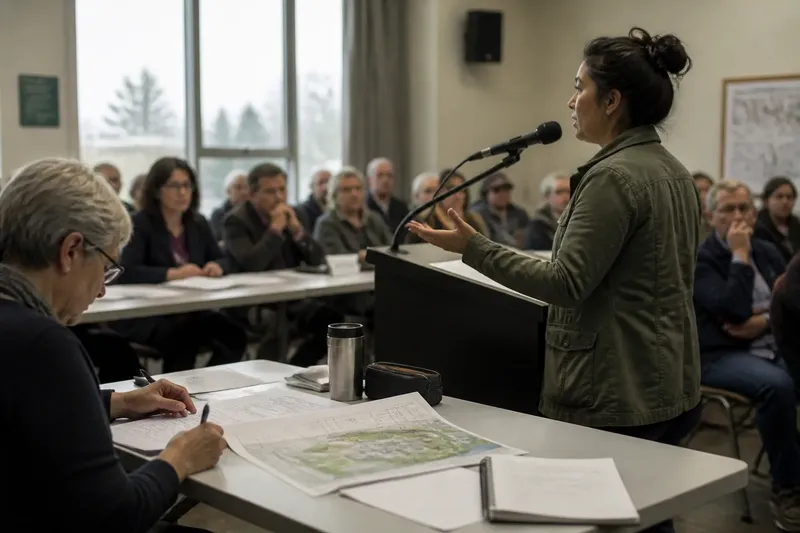
A written comment or public session can carry the same concern, but each asks you to make it clear in a different way. A written response gives you room to shape an argument; speaking in a public session lets you deliver a focused point to people considering the proposal. The choice depends on what you need your contribution to do.
1. Match the format to your purpose
Start by naming the purpose of your response. Are you correcting a detail, explaining how a proposal would affect a particular place, asking decision-makers to consider an alternative, or adding support for a specific element? A clear purpose helps you choose a format and keeps the contribution from becoming a general reaction to the whole issue.
Written comments can carry several connected points, especially when they need explanation or supporting material. A public statement tends to work best when one point deserves attention on its own. If you have multiple concerns, consider whether each can be stated briefly or whether the argument needs the structure of a document.
For example, say you are concerned that a proposed street redesign would make access to a community center harder for people arriving on foot. In writing, you could describe the route, identify the part of the plan that creates the concern, and ask for a particular adjustment. At a session, you might focus on that access issue and make a concise request for it to be considered before the design is settled.
2. Use writing for a developed argument
A written response gives you time to distinguish what the proposal says from what you think its effects may be. You can name the relevant section, explain your reasoning, and make a request that follows from it. This is useful when the point depends on a sequence of details that would be difficult to explain aloud without losing the thread.
Structure matters more than formal language. A reader should be able to identify your main concern, the information behind it, and the change or consideration you are requesting. Paragraphs organized around one idea make it easier to see how your explanation supports that request.
- State the proposal or feature you are responding to.
- Describe the concern or support in direct terms.
- Explain the reasoning, using relevant details rather than a broad claim.
- Make a specific request or say what you want decision-makers to consider.
Attach or refer to material only when it helps clarify the point, such as a marked-up plan excerpt or a description of a location. Keep personal contact details and unrelated information out of material intended for public circulation. Check the consultation instructions for format, deadline, and any rules about attachments; those details can vary by process.
3. Use a public session for a focused intervention
Speaking in a public session gives your point a voice and places it in the room’s discussion. It can help when you want to raise an issue that may otherwise remain implicit, or when a concise question could clarify how a proposal is being considered. The format also requires you to work within the session’s speaking arrangements and available time.
Prepare a short opening sentence that identifies the proposal and your central point. Then give the most useful reason and end with a request or question. Avoid trying to recite every detail from a longer submission; listeners need a clear thread, not a compressed version of a full document.
If you are responding to something said during the session, distinguish your response from your prepared point. Address the claim or question directly, then explain why it matters to your concern. A calm, precise statement is easier to follow than a list of grievances delivered all at once.
4. Preserve nuance without losing focus
Both formats can become unclear when the response tries to cover too much. A long written comment may bury its central request beneath background, while a spoken contribution may become difficult to follow if it includes several unrelated examples. Decide which point matters most and let the supporting detail serve that point.
Specificity does not require certainty about every consequence. You can describe an observed condition, explain why it raises a concern, and identify what you would like officials to examine. Separate what you know from what you anticipate: that distinction helps readers and listeners understand the basis of your view.
For a written response, use a sentence to mark uncertainty where it matters, rather than presenting a possible outcome as established fact. In a public session, say what information would help resolve the concern. Either approach can make a contribution more useful without weakening its central point.
5. Choose one or use both
A written response and a public statement are not necessarily alternatives. If the process permits both, a document can set out the reasoning while a spoken contribution highlights the main request. Keep them aligned: if your position changes, update what you plan to say so the two contributions do not appear to make conflicting claims.
Using both formats takes additional preparation, and it may not add value if the second contribution simply repeats the first. Consider what each would contribute that the other cannot. A detailed explanation may belong in writing, while a concise spoken question could draw attention to an unresolved point.
Do not assume that speaking substitutes for submitting a written response, or that a written comment qualifies you to speak. The process may treat each differently. Look for the instructions on how contributions are accepted and whether there is a separate request to speak.
6. Decide what belongs in the record
A written contribution can be easier to revisit because its wording is fixed. You can review it before sending and keep a copy of what you submitted. That makes writing useful when exact phrasing, a specific request, or a careful explanation matters to you.
A spoken contribution can make a concern visible in the meeting, but its later record may not capture every nuance of delivery or follow-up. If a precise detail is essential, consider putting it in writing as well, if the process allows. Avoid relying on the assumption that an informal conversation will become part of the official record.
Before submitting or speaking, ask yourself: What single idea should someone remember? What detail makes that idea credible? What action, question, or consideration follows? Those answers help shape either format without forcing the same wording into both.
Questions to help choose?
Is a written comment better for a complicated point?
It can be, particularly when the point depends on several linked details or a precise reference to the proposal. Use a clear structure so the reader can see how those details support your request.
Should I speak if I have already submitted a comment?
That depends on the session rules and what a spoken contribution would add. If you speak, emphasize a central point or ask a focused question rather than repeating the full submission.
Can I submit a comment and speak at the session?
Some processes allow both, while others set separate conditions or limits. Check the instructions for the specific consultation and make sure each contribution serves a clear purpose.
What if I feel nervous about speaking?
You can prepare a brief statement and read from notes if the session permits it. If speaking does not suit your needs or the format is unclear, a written response may be a more comfortable way to make your point.
Make the point easy to use
Before you contribute, remove material that does not help explain your position. Keep the proposal reference, the reason for your view, and the request or question. Written comment or public session, the strongest format is the one that lets decision-makers understand what you are saying and why it matters.
A response need not settle the entire issue to be useful. A precise correction, a grounded concern, or a clear request can give public decision-makers something concrete to consider, and it gives you a more deliberate way to take part.