What an Agenda Can Tell You Before a Meeting Begins
An agenda can reveal what a public meeting is set to consider, which papers matter, and where to focus your reading before you attend.
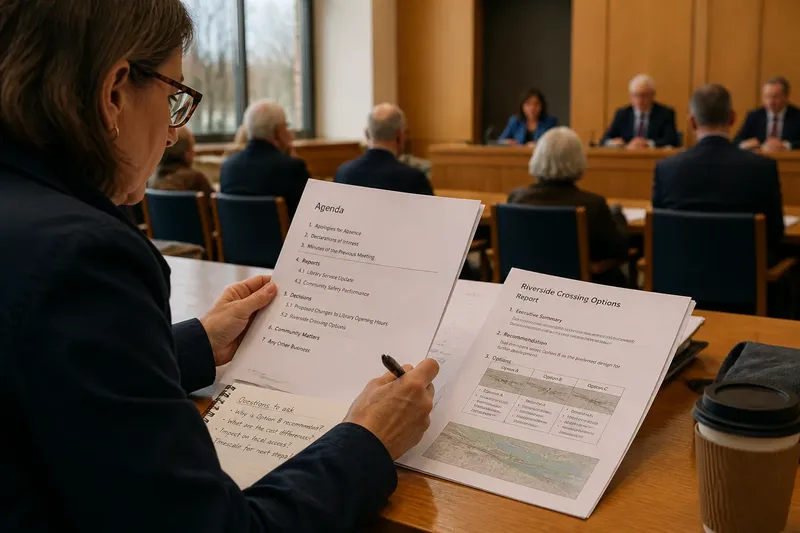
An agenda can tell you more than the names of topics scheduled for a public meeting: its headings, item order, and attached papers can reveal what officials are being asked to do. Read those parts together, and you can decide whether to skim, investigate, or prepare a focused question before the meeting begins.
Three ways to read
There is no single useful pace for reading an agenda. A quick scan can establish the meeting’s shape; a closer reading can clarify a particular item; and a paper-led reading can help when a decision depends on technical or local detail.
These approaches suit different needs. If you are simply deciding whether a meeting concerns you, start with headings and order. If one item affects your street, service, or community group, read its wording and supporting paper. If the issue is unfamiliar or complex, let the attached material guide a more deliberate review.
Scan headings first
Headings often signal the kind of business under discussion. Words such as “report,” “update,” “consultation,” and “decision” suggest different purposes, although the heading alone does not settle what members will do.
Compare a heading like “Library service update” with “Proposed changes to library opening hours.” The first points toward a progress report; the second indicates a proposal that may be considered. Look for the item description, recommendation, or action requested to establish whether the distinction matters in practice.
Also notice broad headings such as “community matters” or “service performance.” They may cover a wide subject, so check whether a short description names a location, project, or decision. If the agenda gives no detail, note that uncertainty rather than filling it in yourself.
For a quick sense of relevance, circle the headings that name a place, service, or issue you recognize.
Follow the order
Item order can show how a meeting is organized. Formal business may come first, followed by reports, proposed decisions, and other matters; a public contribution period, if included, may appear near the beginning or be handled under its own rules.
Order is a clue, not a promise about importance or duration. A substantial decision may appear later than a routine report, and a scheduled item can be postponed or amended. Use the sequence to locate likely discussion, while leaving room for the chair’s management of the meeting.
Pay attention to what sits immediately before and after an item, too. A report followed by a recommendation may be part of the same decision pathway, while a separate heading can indicate a distinct discussion. The agenda may not make those relationships explicit, but the sequence can suggest what to check in the papers.
Read the attached papers
Supporting papers often provide the clearest account of what an agenda item contains. Look for a report title, authoring department, recommendation, options considered, and any appendix or map. These details help distinguish background information from the question members are being asked to consider.
A recommendation may ask members to approve a proposal, note a report, request further work, or choose among options. Those verbs matter: “note” does not necessarily mean the same thing as “approve,” and a report’s background section may describe a proposal without making it the recommendation.
When an appendix is named but not attached, or a link does not open, record precisely what is missing. A map, draft policy, or financial explanation may be central to understanding an item. The agenda can still identify the subject, but an absent paper limits what a reader can confidently infer.
Say you see an invented agenda item titled “Riverside crossing options,” with a report recommending that members select one design for further development. The agenda tells you a choice is expected, while the report and its map would help you see how the options differ; you could then prepare a question about the specific feature that remains unclear.
Choose your reading depth
Match your approach to the decision you need to make:
- Scan the headings and order if you want to know whether the meeting touches a subject you follow.
- Read the item description and recommendation if you need to understand what members may be asked to do.
- Open the relevant paper and appendices if the proposal’s details, alternatives, or local effects matter to you.
- Compare the agenda with the meeting notice if you need to confirm the meeting, its body, or its stated purpose.
Choose the lightest approach that answers your question, then go deeper where the documents leave a meaningful gap.
What should you check?
Does the heading name a decision?
Look for an action word in the item description or recommendation, rather than relying on the title. If no action is stated, treat the heading as a subject label and check the paper for the meeting’s purpose.
What does the recommendation ask?
Find the sentence addressed to the committee or members and note its main verb. That wording helps distinguish a request to approve something from a request to receive information or consider next steps.
Are the supporting papers available?
Check each listed link and appendix for the material named in the agenda. If an essential paper is absent, you can still identify the topic, but should avoid assuming what the missing material contains.
Does the item concern your area?
Look for a named neighborhood, facility, route, or service, and compare it with the issue you care about. If the agenda uses a broad title, the report may reveal whether the connection is direct or only incidental.
Keep the limits clear
An agenda is a map of intended business, not a complete record of what members will say or decide. It can identify the question on the table, but the meeting may revise a recommendation, defer an item, or reach a different decision.
For the clearest picture, separate what the agenda states from what it suggests. That distinction makes it easier to follow public decisions without treating a heading as a promise.
When you search for an agenda, the item title and its supporting paper are usually the most useful starting points; together, they show both the planned subject and the request members are expected to consider.