The Consultation Is Not a Poll: A Common Civic Misreading
Understand why a public consultation is not a poll, how officials weigh responses, and what residents can do when a process feels unclear.
A public consultation is not a poll, even when its form asks residents to choose between options. A poll records preferences in a defined way; a consultation gathers views to inform a decision that may also depend on law, evidence, costs, and public responsibilities. Confusing the two can leave residents unsure what their response means—and officials facing expectations the process never promised to meet.
The distinction matters most when a proposal is contentious. A large number of similar responses may show strong concern, but it does not automatically settle the matter. The useful question is not simply how many people supported an option, but how the decision-maker will consider the material and explain the outcome.
When numbers look decisive
Online forms often display a short list of choices: support, oppose, or unsure. That layout can resemble a ballot, especially when people are asked to select one answer before writing anything. Yet a consultation may not use a representative sample, and its purpose may be to collect reasons, identify impacts, or improve a proposal rather than count preferences.
It can also be unclear who is eligible to respond. A consultation open to residents, businesses, service users, or anyone interested does not necessarily reflect the views of the whole community. The response total describes the material received, not automatically the balance of opinion across everyone affected.
Try this in order:
- Read the notice and form for the stated purpose, who may respond, and how responses will be used.
- Look for a published method explaining whether answers are counted, grouped by theme, or assessed individually.
- If the method is missing, ask the responsible team how it will interpret the responses before assuming a tally is a result.
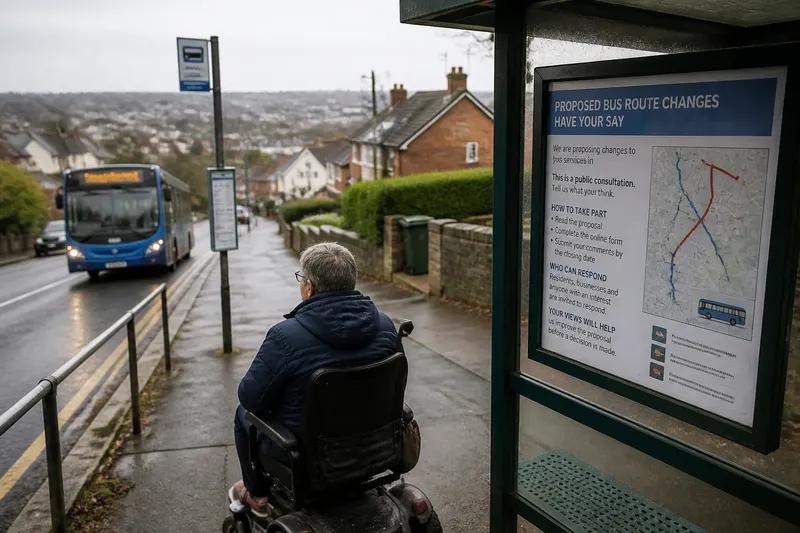
Say you receive a form about changing a neighborhood bus route, with buttons for “support” and “oppose.” You select “oppose” and explain that the proposed stop leaves a steep walk for people using mobility aids. The expected observable result is not necessarily a reversal; your response gives decision-makers a specific access issue to assess and address in their account of the decision.
When many replies seem ignored
Residents may hear that hundreds of responses were submitted and then see the proposal proceed. It is tempting to conclude that the consultation was disregarded. But the number of replies alone cannot show whether their substance was considered, and a decision-maker may have reasons to choose an option that received objections.
For example, a council might need to meet a legal duty, maintain an essential service, or weigh impacts that point in different directions. Those considerations do not make public views irrelevant. They do mean that “most replies opposed it” and “the decision must follow opposition” are different claims.
Look for the consultation report, officer report, decision record, or response summary. These documents may describe recurring themes, identify changes made, and explain which suggestions were not adopted. If no such account is available, ask where the responses and the decision rationale will be published; do not treat silence as proof that the material was never considered.
When the question feels loaded
A form can make a response difficult by asking a broad question about a complicated proposal. “Do you support the plan?” may not reveal whether someone objects to the whole plan, one location, a timing detail, or a missing safeguard. A single choice can flatten a reasoned position into a misleading label.
When possible, answer the question as asked and then state the precise issue in plain language. Name the feature, explain who or what it affects, and suggest a change if you have one. If the form has no space for explanation, check for another permitted submission channel or contact the consultation team to ask how to send supporting detail.
Keep the response focused. A concise account of a specific consequence is easier to connect to a proposal than a general statement of frustration, even when the frustration is understandable.
When the deadline creates pressure
A closing date can make residents feel they must respond immediately, before they understand what is being asked. That pressure is sharper when the consultation page is brief or documents are hard to find. A rushed answer may miss the question that matters most to the resident.
Start with the proposal document and the consultation’s stated scope. Identify what decision is open, which parts are fixed, and what kind of feedback is invited. If essential information is absent, ask a focused question promptly and keep a copy of the reply; an answer may clarify whether your point belongs in the consultation or should be raised through another route.
Do not assume that a long submission carries more weight than a clear one. Organize comments around distinct issues, and separate what you know from what you want the authority to investigate. This makes the reasoning legible without claiming that length or tone controls the result.
When the outcome is hard to trace
Sometimes residents can find the original consultation but not what happened afterward. A decision may appear in a committee report, a service update, a planning record, or a response document with a different title. That gap can make the process feel like an unanswered invitation.
Search the relevant public body’s website using the proposal name and terms such as “consultation response,” “decision report,” or “outcome.” If the record remains elusive, contact the team named on the consultation page and ask where the final decision and response summary can be read. Keep the question neutral and specific; the aim is to locate the record, not to presume what it contains.
When the account is published, compare the original question with the reasons given for the decision. Note whether the report distinguishes common themes from individual comments, and whether it explains changes or unresolved concerns. This is a better basis for judging the consultation than inferring its effect from the final choice alone.
What does a consultation response do?
Does the most popular option have to win?
Not necessarily. A consultation usually informs a decision rather than delegating it to respondents, unless the stated process specifically says otherwise. The decision-maker should consider the relevant material and explain the choice through the applicable process.
Do repeated form responses count as one view?
There is no universal rule that applies to every consultation. The published method may explain how duplicate submissions, campaigns, or identical wording are handled, so check that description before drawing conclusions from a response count.
Can I challenge a decision because my view was not adopted?
Disagreement with the outcome does not by itself show that the consultation was mishandled. If you believe the process failed to follow its stated rules or omitted relevant information, raise the concern with the responsible public body and seek qualified advice where a formal legal issue may be involved.
What should I ask if the process is unclear?
Ask what decision is open, how responses will be assessed, and where the eventual report will appear. These questions clarify the process without treating consultation as a promise that a particular answer will prevail.
Read the process, not the tally
The practical value of a consultation lies in the route between public input and a recorded decision. A response can identify an overlooked effect, challenge an assumption, or sharpen a proposed change; none of those contributions is the same as casting a binding vote. The consultation notice and the eventual decision record are the best places to see what role the authority assigned to public views.
For a consultation that feels unclear, return to its stated purpose, find the method for assessing responses, and ask where the outcome will be recorded. That simple sequence keeps expectations grounded while giving residents a clearer basis for participating—and for asking a sharper question when the public record does not explain how the decision was reached.